
Go With Your Gut
Stop ranking your to-do list. Just ask: this one, or that one?
Everything stays on one long list, and you answer one small question at a time: would I rather do this than the task I’ve already picked? You never plan the day. You only compare two tasks, again and again.
- YOU PLAN
- Never in advance
- THE LIMIT
- None
- CORE MOVE
- This one, or that one?
The idea
Keep one list in the order things come up and mark the first task. Then read down and mark any task you’d rather do than the last one marked. Do the last one you marked.
Comparing two things is easy; ranking twenty is hard. Each choice is small and follows how you feel right now. And because the chain starts at the top, old tasks keep getting looked at instead of sinking.

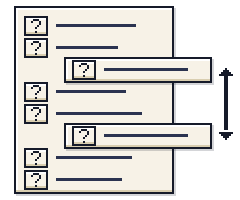
How it works
No plan. Just a chain of small choices down one list.
01ANYTIME
Keep one long list
Add things to the end as they come up.
02WHEN YOU’RE READY
Mark a chain
Mark the first open task. Read down. Rather do this than the last one marked? Mark it too.
03AS LONG AS YOU LIKE
Do the last mark
Work on the last task you marked, for as long as you like.
04WHEN YOU STOP
Cross off or re-add
Done? Cross it off. Not done? Cross it off and write it again at the end.
PICK UP THE CHAIN
Then back to step 01.
After each task: the one you marked before it is next. When no marks are left, start again from the top. Once a week, read the whole list and cross off anything that no longer matters.
Signs it’s working
- After a week, you know what to do next within seconds.
- New tasks go on the list the moment you think of them.
- The top of the list keeps changing: old tasks get done or dropped, not left for weeks.
- After a month, you rarely re-add the same task more than twice.
Common pitfalls
Marking everything
A mark means “rather than the last one I marked,” not “important.”
Skipping the top task
Always start a chain from the first open task. That keeps old tasks from sinking.
A list that only grows
In the weekly read-through, cross off what you’ll never do.
Deadlines slipping
The method has no calendar. Set a reminder for the few tasks that have a real date.
Where it comes from
Go With Your Gut is based on Final Version Perfected. Here’s the original, what we changed to make it simpler, and how to make it yours.
1 · THE ORIGINAL
Final Version Perfected (FVP) is a list method by productivity writer Mark Forster, refined from his earlier “Autofocus” methods. You keep one list, mark the first task, then read down and mark any task you’d rather do than the last one marked. You do the last task you marked.
2 · OUR VERSION
We kept the one question at its heart, “Would I rather do this?”, and put the rules in plain steps, so it works on any list from the first day without learning the method’s terms.
3 · YOUR VERSION
To Do Machine starts every system with the fewest rules that still work. That’s on purpose: it’s quicker to learn, and using it shows you what you actually need. Try it as is for a couple of weeks, then change what doesn’t fit.
For example: List getting long? Clear out anything you’ve skipped for a month.
GET THIS SYSTEM
To Do Machine can customize this system for you
To Do Machine has this system built-in, ready for you to customize to work exactly how your brain works.